Your Home Course

A place they can practice. A place they can play. A place for the family.

Public or private. What it costs. Whether they can use the range after school. The handicap is a cheap measuring stick — you don’t need a country club for it.

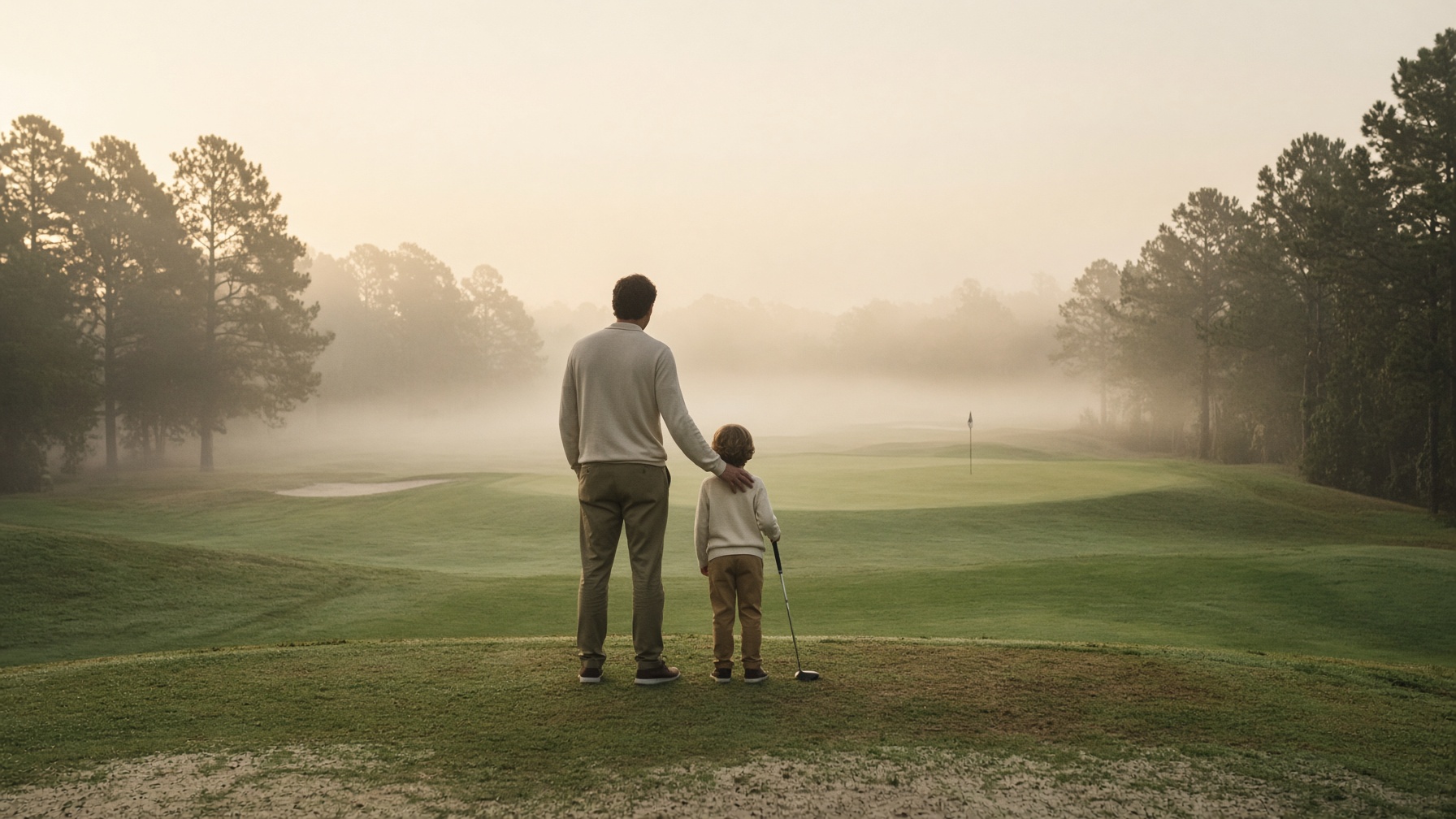
A parent and child on a tee box, looking down the fairway

The number

How to get a handicap without making it a personality.

It’s a cheap measuring stick. Post scores, see if they’re getting better. You don’t join a country club for it. You buy an electronic membership from your local district golf association — usually thirty-something to eighty bucks a year. U.S. Kids, Jr. League, and First Tee don’t need it. The number is for you.

  1. 01

    Wait until they can finish 9

    A Handicap Index is a scoring record from a rated tee. If they still pick up, play from 50 yards, or melt down on hole 6, you do not need a number yet. Operation 36 and U.S. Kids locals do not require one.

  2. 02

    Buy an electronic membership from your district golf association

    You do not need a private club. Your local / district / state golf association (the Allied Golf Association for your area) sells an electronic membership — often called an eClub or e-membership — usually $35–80 a year. Pay online, they issue a GHIN number (said “gin”), you post scores. Your muni, a private club, or some Youth on Course / First Tee chapters can also issue one if you already belong. USGA Membership is not a handicap.

  3. 03

    Parent logs in if they are 12 or under

    COPPA: GHIN will not let a 12-and-under create their own login. You do. The number is theirs. The password is yours. Post from the GHIN app the day they play.

  4. 04

    Post 54 holes on a rated course

    Any mix of 9s and 18s. Six honest 9-hole rounds is enough. Course must have a Course Rating and Slope — backyard, simulator, and Op36 25-yard loops do not count. Status reads NH until the 54th hole. The Index appears the next day.

  5. 05

    Post every round after that

    First three 18s: max score is par + 5. After that, net double bogey. Do not sandbag. Do not vanity-cap. The number is for them, not the group chat.

They can play without it

  • U.S. Kids Golf locals (age groups, Longleaf tees)
  • PGA Jr. League
  • First Tee
  • Drive, Chip & Putt
  • Operation 36 on-course levels
  • Most Hurricane Opens and UA Junior Tour starts

You want the number for

  • State junior amateur / qualifying
  • AJGA (and anything that wants a real scoring record)
  • U.S. Junior Amateur — 2026 cap is a 2.4 Index, not a participation trophy
  • High school in states that use GHIN
  • Club events, net divisions, member-guest if you actually joined

Public or private

You are buying practice access, not a logo.

Green fees almost never justify a private club for a junior. The Tuesday 4 p.m. chipping green might. Walk the short-game hole. Ask if unaccompanied juniors are allowed. If they flinch, keep your money.

The default. Usually the right one.

Stay public

Youth on Course for $5 holes, a muni for the weekend, a public range for the week. Buy an electronic handicap membership from your local district golf association — you do not need a private club for a GHIN.

You will wait on the range. The short-game area may be a putting green and a prayer. After-school walk-on is whoever answers the phone.

Unlimited-ish holes. Still a public range.

Muni / public pass

A junior or family season pass at the city course. Green fees stop hurting. You still live in the real world: frost delays, leagues occupying the range, no locker with their name on it.

Passes rarely include unlimited range. Short game is whatever the parks department built in 1994.

A middle that actually exists.

Semi-private

You pay dues. Public still plays there. Junior rate is real. Range and a short-game hole are usually why you joined — not the dining room.

Weekend tee times still fight the public. Some ‘semi’ clubs are just expensive daily-fees with a card.

You are not joining ‘for the kid.’ You are joining as a family.

Private club

Unlimited range, a real short-game hole, a putting green they can use like a backyard, a junior program with names. The after-school hour is the product.

Initiation + dues + food minimum + capital calls. Waitlists. Interviews. A parent membership is the ticket — there is almost never a ‘junior-only’ private club. If the parent does not want to be there, you bought a very expensive range.

The bill

What it actually costs to have a place.

National midpoints, not a quote. Call three clubs. Private is a family membership — there is almost never a junior-only door.

Where you live

Charlotte, Denver, Phoenix, Columbus — busy but not coastal-insane.

The path

24

1

Stay public · year 1

$1,257

Then $1,257 a year. Five years: $6,285

  • Youth on Course$50
  • Electronic GHIN (district assoc.)$55
  • 24 junior rounds$672
  • 40 range visits$480

The read

Stay public. This is not a club problem yet.

At 24 rounds and 1 practice day a week, Youth on Course plus a GHIN eClub is the whole operation. Private does not make them better. It makes the parking nicer.

Five-year total

Same rounds, same practice habit. The gap is access, not 18 holes.

Practice access by home course
AccessStay publicMuni / public passSemi-privatePrivate club
RangeBag of balls. Hours posted. One bucket if you’re lucky on Youth on Course days.Usually extra. A range membership on top of the pass is the move if they practice 2+ days a week.Usually included, sometimes with a ball limit. After-school bags are the whole point.Unlimited. That’s the argument. Balls, stations, a pro who knows their name.
Short gameOften just a putting green. Real bunkers and a chipping green are a gift, not a given.Same as public — unless your muni actually invested. Ask before you buy the pass.Putting green plus a chip/bunker area at the better ones. Confirm on the tour — do not take the brochure’s word.The actual reason. Bunkers, a chipping green, 40-foot putts after homework.
After schoolCall ahead. Twilight junior rates if they have them. No, you cannot just show up at 4:15.Better. Members / passholders get the leftover times. Still not ‘walk out of school onto a green.’This is the test. If a 12-year-old cannot drop a small bag at 4 p.m. on a Tuesday, keep shopping.Yes, if the club culture allows unaccompanied juniors. Ask that question in the tour. Twice.
WinterIndoor bay / simulator you pay for, or a garage mat.Same as public unless the facility has a dome.Hit or miss. Ask about mats, a shed, a deal with a nearby indoor.Often a simulator room or a relationship with one. Still not automatic.
Built-in peersPGA Jr. League, First Tee, the range regulars. You assemble the group.Junior clinics and high-school kids on the same range. Fine. Not a built-in team.A junior program if they bothered. PGA Jr. League hosted on-site is a green flag.Built-in. Junior golf, swim, the same twelve families. That can be the point — or the problem.
HandicapElectronic membership through your district/state golf association (~$35–80/year). Some Youth on Course regions include it.Often included with the pass. If not, add the eClub.Included. That’s a GHIN club. Parent can have one too.Included, and posted like a religion. This is how Indexes get honest.

Estimates, 2026 national midpoints. Initiation and dues swing wildly club to club — a “typical metro” private can be $8k to join or $80k. Youth on Course is $5–65/year by region, then $5 holes. We don’t get paid if you join a club.

The tour questions

  1. 1. Can a junior drop a bag after school without a member standing there?
  2. 2. Where do they chip? Point at it. If it is “over by the range,” keep walking.
  3. 3. Is the junior program a clinic, or just a discounted tee time?
  4. 4. What does the family actually pay year 1 — initiation, dues, food, capital, range?
  5. 5. If the kid quits in 18 months, can you resign, or are you in a note?